
Showing posts with label Camera. Show all posts
Showing posts with label Camera. Show all posts
Wednesday, 1 April 2015

Monday, 2 March 2015
Getting off manual
 My first SLR camera was a Zenith 11. It was a big solid Russian brick and for me
it was the perfect introduction to SLR photography. The camera was manual focus, with needle and
ring metering You had to set the
aperture and shutter speed for appropriate for what he needle and ring meter
was telling you. In other words it was
completely manual.
My first SLR camera was a Zenith 11. It was a big solid Russian brick and for me
it was the perfect introduction to SLR photography. The camera was manual focus, with needle and
ring metering You had to set the
aperture and shutter speed for appropriate for what he needle and ring meter
was telling you. In other words it was
completely manual.
I now have a Pentax K1000.
That too is a fully manual camera.
The difference between the two is that the K1000’s light meter is in the
viewfinder. I don’t need to take the
camera away from my eye.
My Micropress 4”x5” pinhole camera is totally manual. It doesn’t focus. It doesn’t have a shutter and it has a fixed
aperture of f512. It doesn’t even have a
light meter. I have to work that out in
my head using ‘sunny 16’ rule or use an app on my mobile phone. Generally, I opt for ‘sunny 16’.
 I also own an Olympus Trip 35. It’s a fantastic little camera. It’s mainly automatic. You use a zone focus system to focus the lens
and the aperture and shutter speed are chosen by the selenium light meter. It’s such a clever piece of engineering it
doesn’t even need batteries. I love
using this camera. It’s so much
fun. Even my kids like using this
camera!
I also own an Olympus Trip 35. It’s a fantastic little camera. It’s mainly automatic. You use a zone focus system to focus the lens
and the aperture and shutter speed are chosen by the selenium light meter. It’s such a clever piece of engineering it
doesn’t even need batteries. I love
using this camera. It’s so much
fun. Even my kids like using this
camera!
My DSLR is a Pentax KX.
I love this camera too (as you have probably gathered from previous
posts). It has these nifty little modes
on it PASM. I use PAS a lot. I only use M on very limited occasions. It has autofocus. Again, I use this more than I have it turned
off.
Does this make me any less a photographer? The answer, in my honest opinion, is a
resounding no.
I do find it amazing that some photographers believe they
are not a photographer unless they are shooting in manual mode. I would love to know where this opinion has
come from because I do believe it to be utter nonsense. Why?
Well read on and I’ll tell you why.
Let’s start with autofocus.
The autofocus on my KX works. It nails
the point of focus I am after 99% of the time.
The only time it starts to fail is if there isn’t enough light or scene
contrast. I know my camera well enough
to know this and will then flip to manual focus. That being said, there is absolutely no way I
can focus as quickly and as well as my KX.
Now on to determining shutter speed and aperture; whenever I
have seen someone using manual I have asked them how are they are measuring the
light. All of them have told me they use
the cameras light meter. Now forgive me
if I am being naïve but as I understand it, in any of the automatic modes the
camera measures the light and sets the ISO, aperture and shutter appropriate to
the conditions in order to give you the
best photograph possible. If the camera
is in aperture priority mode then it will measure the light, and set the ISO
and shutter speed appropriate to the aperture that you have chosen. The same can be said for shutter priority
mode where the ISO and aperture are set for the chosen shutter speed.
Again, my KX has software built in to it that can make these
decisions in a fraction of a second. I
know I cannot possible read my light meter and dial in the appropriate settings
anywhere near that.
I suppose that the point I’m trying to make is that the
major camera manufacturers has invested millions in to developing Auto PAS
systems that are quick, efficient and accurate; they have invested time and
money to make it easier and more practical for you to go out and shoot
photographs. You have spent hundreds if
not thousands of pounds buying a camera that has these capabilities. Why turn them off? If you want to learn how to shoot manually,
why not buy a totally manual film camera?
Shooting in Auto PAS modes does not make you any less a
photographer. It makes you a wise and
happier one!
Wednesday, 18 February 2015
We're Back!
 After a couple of days off for Half-Term we return to business as usual!
This week has seen the release of the latest episode of the Film Photography Podcast.
Now on it's 119th episode the FPP has become a one-stop shop for everything related to film photography.
This episode includes features on Instax photography, Kodak Brownie Hawkeye mods, Stereoscopic Photography, Scanning negs and slides, and much more.
It's well worth a listen and is available free from iTunes or the FPP website.
Thursday, 12 February 2015
More new models announced
 Not so long ago I posted that the design of the Pentax K-S1
finally made sense to me so I can’t shocked to announce the arrival of the
replacement model the K-S2.
Not so long ago I posted that the design of the Pentax K-S1
finally made sense to me so I can’t shocked to announce the arrival of the
replacement model the K-S2.
The Pentax K-S2 doesn’t boast the futuristic designs of the
K-S1 but does have a range of features that are said to ‘rival high end models’.
It starts with a 20.1MP senor, 11 point autofocus system
with 9 cross points and 77 segment metering.
The camera also has a selfie screen which is capable of rotating 180˚ and as a first in K series camera
has Wi-Fi connectivity.
The K-S2 is also weather sealed for protection against water
and dust making this an ideal landscape SLR.
It is expected that the K-S2 will hit retailers later this
year and will be priced at £549.99 for the body only option and £649.99 for a
weather sealed 18-55mm lens. The body
will be available in a range of colour options.
Sigma has also announced two new models.
 First up is the dp0 Quattro.
Very little details of this camera are available at the moment except
that it will have a 14mm, f4 lens.
First up is the dp0 Quattro.
Very little details of this camera are available at the moment except
that it will have a 14mm, f4 lens.
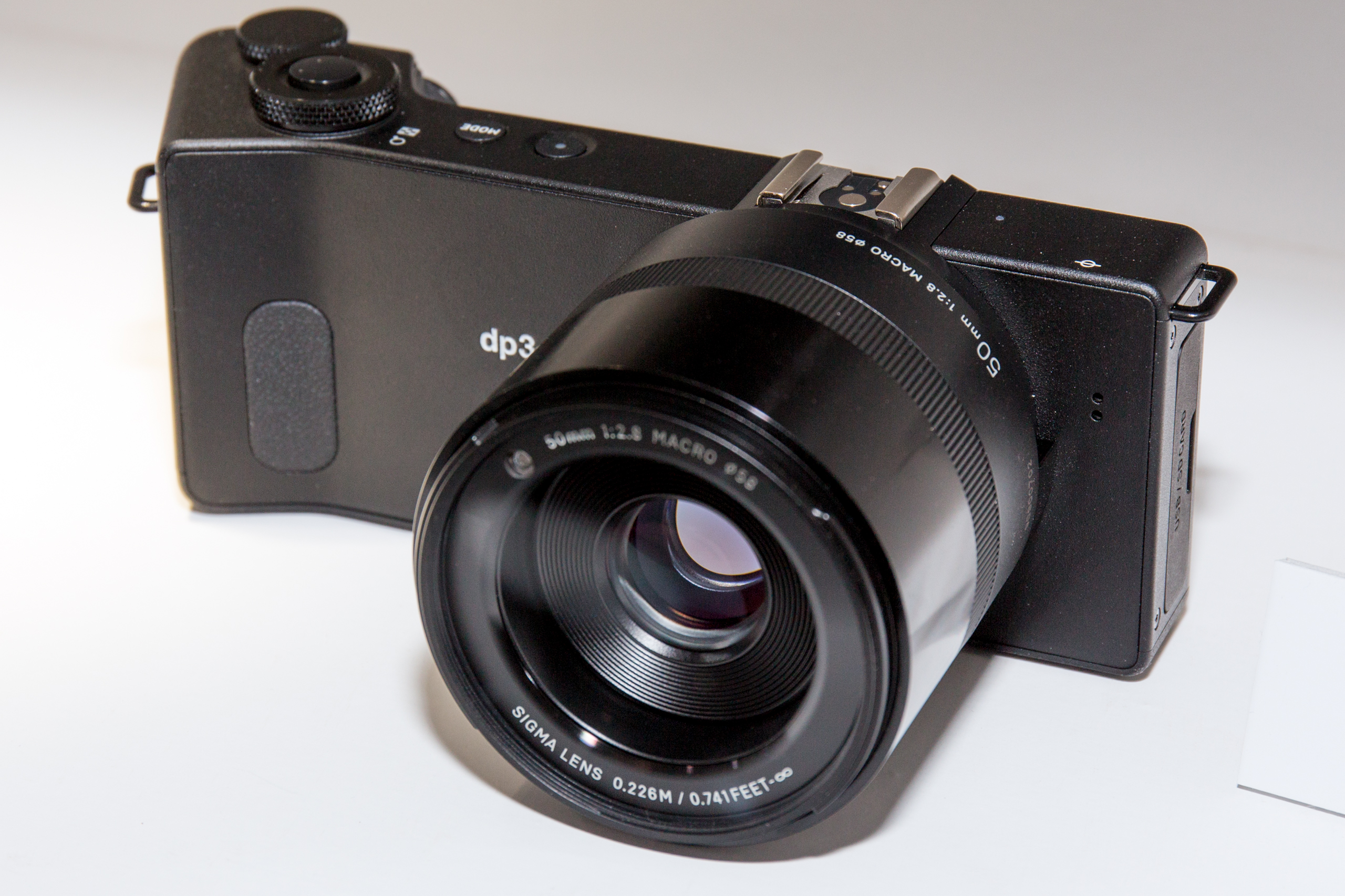
Also Sigma announced the upcoming dp3 Quattro. This camera includes a 50mm f2.8 lens which
is the equivalent of 75mm in 35mm format.
Sigma have stated that it is their intention to have a Quattro
model to suit most types of photography.
Wednesday, 11 February 2015
Updated: Blackburn's Cinematography Pioneers
I had a nice surprise in my emails this morning. Barry Noon, the President of Blackburn and
District Camera Club and friend forwarded an email about an 1880 camera built
by Sagar Mitchell of Northgate Blackburn.
 |
| Sagar Mitchell |
Mitchell had been a photographer and manufacturer of
photographic equipment while Kenyon had manufactured automated slot
machines. The combined talents of the
both of them would lead to developments and archives that still exist today.
They formed their partnership in 1897 under the trade name
of Norden and the company became one of the largest producers of film in the
United Kingdom. Their first showing of a
film was reported to be of Blackburn Market (that was located in King William
Street adjacent to the clock) and was show at Mitchells premises of 40
Northgate on the 27th November 1897.
In 1899 a travelling showman commissioned the pair to make a film of
people leaving factories for the Easter Fair.
The same year Norden released three fictional films, The Tramp’s Surprise, The Tramps and the
Artists and Kidnapping by
Indians. These led to more and more commissions
from travelling showman and cinemas.
The pair made films across many genres their most famous and
historically important being their ‘topicals’.
These were documentary films that depicted ordinary life in Edwardian
Britain. They feature mill workers,
Easter Fairs, Temperance marches, Wakes Week holidays in Blackpool and
Morecambe and emigrants boarding ships in Liverpool bound for Boston.
News also became a big part of the company’s business. The film troops leaving and returning from the Boer War, shot war re-enactments in the surrounding countryside of Blackburn using smoke bombs and guns for special effects; they were responsible for the first crime reconstruction film, The Arrest of Goudie in 1901 which was made and show just three days after the arrest of Thomas Goudie. Sports news also became a regular feature of their work with local football teams often being the subjects.
They also shot some slapstick comedy films that no doubt influenced the Keystone Cops and Charlie Chaplin (Chaplin performed at the Theatre Royal, Ainsworth Street, Blackburn in 1903 and 1905). Their most famous comedy film was called Diving Lucy of 1903 and was filmed in Corporation Park.
In 1907 Mitchell resumed possession of his original business in Northgate and from here on the volume of film production began to decline. By 1909 films were only being made in the local area with the last surviving film being made in 1913. In 1922 the partnership was dissolved with Kenyon dying in 1925 aged 75. Mitchell continued to runs his photography business with his son until his death in 1952 aged 85.
Many of their films were stored in the basement of the
Northgate business and were uncovered by workmen. The films have been restored and are now in
the possession of British Film Institue.
Monday, 9 February 2015
New models - Samsung & Canon
Now that the Christmas buying period is out of the way it would seem that the big camera companies are already looking at making your shiny new camera out of date.
Two new models aimed at the entry level of the market. The EOS 700D and EOS 70D are both 24.2MP SLR with different designs, and are aimed at different users.
 |
| Samsung NX500 |
First up is the Samsumn NX500. This is a 28MP CSC camera sporting 4K and Ultra High Definition (UHD) video recording. As with the current trend in the compact market the screen flips up for 'selfie view'. The NX500 will be available from March 2015 however, Samsung are yet to confirm the price.
Canon have gone all out with a range of new models on their way.
The EOS 750D is targeted at people new to the using SLR cameras such as those that are looking for something a bit more than their smartphone or compact camera.
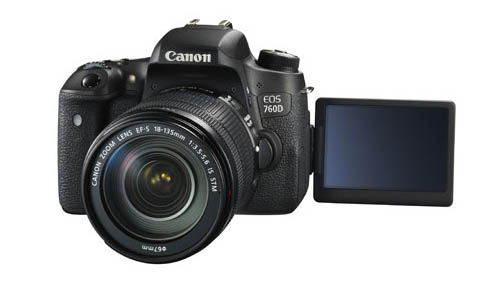
The EOS 760D is aimed at the enthusiast market and has more manual features available for photographer to explore their 'creative freedom.'
 |
| Canon EOS 760D. |
Both cameras feature 5fps shooting, a vari-angle LCD, plus a 19 (cross-type)-point AF system, full HD movie modes include the ability to share files in MP4 format and Wi-Fi connectivity
The EOS 760D will cost £649.99 body only, while the EOS 750D will cost £599.99 body only or £689.99 in a kit with an EF-S 18-55mm lens.
The third offering from Canon is the EOS M3. This is a CSC camera that is aimed squarely at the enthusiast market. This camera also has a 24.2MP APS-C sized sensor, HD video and Wi-Fi connectivity. As with what looks to be the trend with the CSC market at the moment it comes with the all important 'selfie screen'. The EOS M3 also has a hotshoe allowing it to be connected to speedlites and studio systems. The EOS M3 will be available from April as a kit with an 18-55mm lens priced at £599.99.
At the top end of the range Canon have also announce the release of the EOS 5DS and 5DS R. Both cameras have the same specification except the 5DS R has two low pass filters installed. The camera both bost 50.6MP full frame sensors, 61 point AF system and 3.2 inch LCD screen. The EOS 5DS will go on sale at £2999.99 body only and the 5DS R will be priced at £3199.99. Both cameras will be available from June 2015.
Finally a tech announcement from Canon has indicated that there will be a new PowerShot G3X in the very near future. Very little is know about the camera at this stage but it is likely that it will have a 25x zoom (equivalent to 24mm - 600mm in 35mm terms). It is expected that a demonstratuion version of the camera will be ready for the CP+ trade show in Japan later this month.
Friday, 6 February 2015
To end the week
This week Bob, braved the cold and the spindrift to top off Pen-Y-Ghent (all 2277 feet of it). He came back with a lovely set of pictures taken with his Canon Powershot S100.
If you would like to see one of your pictures featured in our To End the Week Spot then drop them in our Flickr group and if you are chosen we'll be in touch!

If you would like to see one of your pictures featured in our To End the Week Spot then drop them in our Flickr group and if you are chosen we'll be in touch!
Have a good weekend!!! See you Monday!
Thursday, 5 February 2015
Olympus OM-D E-M5 Mark II arrives
 The long awaited successor to the enthusiast level Olympus OM-D E-M5 has arrived in the guise of a Mark II version.
The camera has a completely new algorithm for is image stabilising system making it the 'worlds most powerful IS' which Olympus claim is an improvement equivalent to 5 stops of shutter speed.
The 16 megapixel camera has been fully weatherproofed and is now even 'freezeproof' making ideal for landscape photographers.
The camera also has a clever little trick. It has a sensor shift IS program which combines eight images to 'deliver a 4MP image with breathtaking levels of detail and radiance.'
The camera goes on sale later this month and is priced at £899.99 for the body only option. A kit is available with a 14-150mm f4-5.6 lens priced at £1249.99
New Pentax full frame camera announced
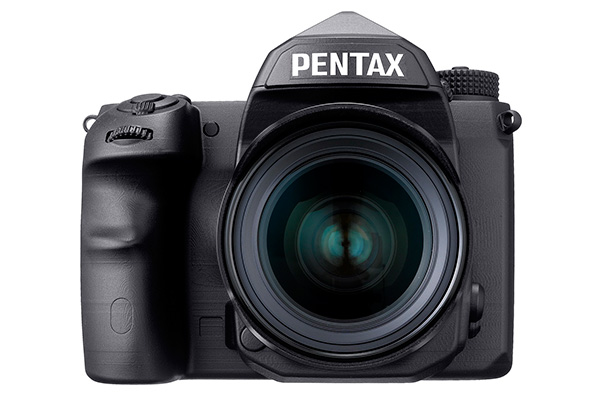 Ricoh Imaging has announced that there will be a new full
frame Pentax DSLR.
Ricoh Imaging has announced that there will be a new full
frame Pentax DSLR.
Very little detail has been announced so far but the camera
is due to see it launch at Japan’s CP+ trade show.
Ricoh has said that the camera will be ready for sale by the
end of 2015. It will feature Pentax’s K
mount lens system making it compatible with a wide range of lenses both old and
new. The camera will also feature a crop
feature allowing the lenses that are designed for the APS-C sensor to work on
the camera too.
The
design of the exterior is yet to be finalised but Ricoh have issued one image
of the camera.
There
will also be some new full frame compatable lenses including 70-200mm f2.8 and
150-450mm f4.5-5.6.
The
CP+ trade show runs from 12th February until the 15th February
2015.
Wednesday, 4 February 2015
Is it really a stupid question?
 |
| Breakwater and Ball - Digital Monochrome, Lee Johnson |
After doing my research I still believe that it could well be. I've read several articles about how much better the monochrome image from a converted digital camera is from a colour image that has been converted.
First, I have to admit that I do love monochrome photography. There is just something about it and in my head I know it doesn't make sense, after all I do not see objects, people or landscapes in black and white. I see them in colour. I am of an age that I remember watching TV in black and white. Would I go back to those days? Nope, not really. I seriously think it's more of a nostalgia thing.
 |
| The Leica M Monochrom |
One of the options in the poll is 'No, I'm saving up for a Leica M Monochrom instead'. This option does sort of make sense to me. Why not have a camera that is dedicated to shoot just monochrome images? Ok, if I were going to spend that much money on a camera and lenses I would probably be looking to invest in a Pentax 645z or a quality large format film camera and not a Leica but at first the sentiment was there.
 |
| Heptonstall - Shot on Ilford FP4+ and scanned, Lee Johnson |
Perhaps a converted digital camera may shoot a monochrome image better than some of these options (I still think a negative and a nicely made print is more beautiful than any digital image) but for me, the quality I get using the techniques and equipment I have at my disposal are more than adequate for my needs.
If you are feeling brave you can convert a digital camera to a monochrome digital yourself. Petapixel have an article here.
Monday, 2 February 2015
Now I get it!

It's fair to say I am a Pentax fan. I bought my digital KX because I knew there was a lot of excellent quality lens available both new and old available for it. I knew the imaging was good, I'd searched flickr and done my homework. Above all the KX felt right in my hand. It actually felt better in my hand than the equivalent Canon and Nikon did (although I have to admit, it was a toss up between the KX and Nikon). I love my KX so much that I bought a K1000 film SLR. I love that so much that I have a Pentax Espio 115G, a 645 (both film and digital) and 110 Auto on my GAS (Gear Acquisition Syndrome) list.
 |
| Orion - best seen on Flickr |
I've done night photography before but it has always been pretty much in an urban area. Last night it was dark, in fact it was so dark that my camera's auto-focus was useless and I hit on another problem. I couldn't see through the viewfinder. Well, no that's not strictly true. The light of the rear display was interfering with my eyes own capability to see in the dark. Of course, I could use live view or turn the display off. Well, I could have if I could;
- remember which button it was in the dark or;
- seen the button in the first place.
As a result I have a new mental note. That is, 'if shooting in the dark take either a torch or phone with me'. It helps light the back of the camera up even and I can find the buttons! Either that or buy a camera that has light up buttons.

For those that still like to shoot film
A couple of weeks ago we introduced you to the Film Photography Project and their podcasts. If you want a valuable and fun resource on film photography then this is the place to be.The new issue is out now and includes items on the Nikon F6, Nikon F2 Photomic and the Anniversary Brownie. There is a review of some books and a large format photography report. All good stuff.
The podcast is available from iTunes or on their website here. Its well worth a listen.
Friday, 30 January 2015
To end the week.
I thought this might become a regular feature. This week Liam has provided us with a picture. If you would like to see your picture here then just drop some pictures in to our flickr pool or email us and you could be our picture of the week.

Have a good weekend!!! See you Monday!
Have a good weekend!!! See you Monday!
Thursday, 29 January 2015
Previsualization
 |
| The finished shot. Slightly different from the concept. |
In the pub afterwards we were talking about the shoot and
one of the lads said something like ‘You knew where you wanted to go and what
you wanted to shoot.’ The truth is I
did. In fact I had been thinking about
it for a few days.
 |
| Previsualization sketch from my notebook. |
Normally, if I had had the time I would have gone out and
made a reccy during the day taking some reference shots with either a compact
or my phone. As it turned out I didn’t
have time to do this so I had to work from memory. And it was a long time since I had been from
that location.
I’m not sure about how many other photographers do this but
I tend to keep a photographers notebook.
In there are the ideas for my projects, shots that have inspired me,
recipes for chemistry, developing info for different films and shoot sketches.
I have to admit that it is not often I draw sketches. I tend to only do this if I’m doing any shots
with lighting in them. It allows me to
see where the flash units go. Of course
the practicalities on site often mean that I deviate from the plan but at least
I have some idea of what to shot and how to shoot it.
This is called Previsualization and although used more in
movie making its origins stem from photography.
So what is previsualization?
The great oracle of information, Wikipedia, sums previsualization as;
‘Previsualization (also known as pre-rendering, preview or wireframe
windows) is a function to visualize complex scenes in a movie before filming.
It is also a concept in still photography. Previsualization is applied to
techniques such as storyboarding, either in the form of charcoal
drawn sketches or in digital technology in the planning and conceptualization
of movie scenery make up.’
Ansel Adams (see video below) wrote extensively about visualising photographs
before actually going out. The term
Previsualization is attributed to Minor White who divided up visualization up
in to sections. Previsualization was
seeing the image before shoot; visualization was studying the subject while
shooting; and post-visualization was remembering the subject while
printing. White determined his process
of visualization as a ‘psychological concept’.
However, he admitted that he had learned the idea from both Adams and
Edward Weston.
Visualization has been used in cinema from the very
beginning firstly starting with storyboards.
Walt Disney would photograph the storyboard and edited them
together in what was called the Leica Reel and add soundtracks to them as a way
of determining the finished animated film.
George Lucas would push the visualization method further
with his Star Wars series of films. The
Speeder Bike sequence from Return of the
Jedi was planned using models with lip-stick cameras attached.
Later, Lucas’ company Industrial Light and Magic would
develop 3D visualization techniques during the filming of Spielberg’s Jurassic Park which won the company an Oscar. As an interesting side note it was an ILM
employee, John Knoll that was behind the creation of Photoshop.
Software for visualization is now readily available should
you want to go to that extent.
However, for me the secret to previsualizing a photograph is
to know how light affects a subject, do your research and use your imagination.
Tuesday, 20 January 2015
Meet the Lumix GF7 - The Selfie CSC
 A couple of weeks ago we featured an article about Fujifilm’s
XA-2 CSC camera that appeared to be aimed at the growing selfie market.
A couple of weeks ago we featured an article about Fujifilm’s
XA-2 CSC camera that appeared to be aimed at the growing selfie market.
Today, Panasonic release news of a new CSC model aimed also
at the selfie market.
The Lumix GF7 is a 16 megapixel, micro four thirds camera
that has the selfie straight at its heart.
The rear LCD is capable of being turned to face forward in the same
manner as the XA-2 and doing so initiates the ‘selfie’ mode of the camera. From here the camera’s soft skin and slimming
modes can be activated as wee as face detection auto shutter just to make sure
that you too can look like a vogue cover model.
For something a bit different the camera can be connected to
a smartphone via wi-fi to activate a jump shot mode where the camera will
automatically fire the shutter when you get to the optimum height of your jump.
The camera look has a retro feel to it which is accentuated
with a ‘leather feel’ grip. It also
features full HD video, time lapse and stop motion animation settings.
There are also plenty of digital filters for those looking
for an Instagram type look to their images with a choice of 22 including retro,
dynamic monochrome and toy camera effects.
Interestingly, the camera can be set to record the same image
twice. One with the filter applied and
one without.
The GF7 will be hitting UK stores in March and will cost
£429. It will be available in silver or
brown.
Monday, 19 January 2015
Reaching 5000

The beginning of this week sees a little landmark reached for us here at Pixel. We have had finally reached the 5000 read mark for our website. Considering the amount of photography related websites out there and we cover just a tiny area within Lancashire this is really impressive.
We would like to thank everyone that has taken time to stop by and spend a little time with us. Don't forget we're here all week so why not pop back or even drop us an email.
Thanks again!
Thursday, 15 January 2015
Fujifilm releases new CSC camera
 Fujifilm, the company that is taking the interchangeable camera market by storm has announced details of a new CSC camera set to be on sale in March this year.
The camera appears to be aimed at producing high quality selfies with its 172 degree tilting screen and eye detection AF mode.
The X-A2 has an APS-C sized centre with boasting 16 megapixels and the EXR II processor engine now familiar with Fujifilm products. The camera will cost £449.99.
Friday, 9 January 2015
Pinhole Resources
 Yesterday we saw the announcement of World Pinhole Photography Day 2015 and we thought it would be a good idea to end the week with some resources to help you get involved. Have a go at pinhole photography. Its seriously fund and addictive. Above all it's cheap and easy to do!
How to build a pinhole camera
Kodak - How to build a pinhole Instructables - How to make a pinhole camera
A Pinhole Gallery
Pinhole GalleryWPPD Gallery
 Buying Pinholes
Holga Pinhole Lens - Other mounts are availablePop-up Pinhole Company
Lomography
Pixel do not endorse products or recieve payment from any third party company. We're here to give you ideas and share a bit of camera love!
And to end this post a couple of little films
That's it for our first week back. We hope you have enjoyed popping in to see us. Have a lovely weekend whatever you are doing.
Thursday, 8 January 2015
World Pinhole Photography Day
 |
| Be part of something big, (through something very small). |
Everyone in the world is invited to take a picture with a pinhole camera, upload it to http://www.pinholeday.org and become part of the Internet's premier pinhole photography gallery.
Pinhole cameras have no lens at all and pinhole photos are taken simply through a small hole. It is very fun, educational and creative to use these kinds of cameras that can even be self-made with various boxes or cans. Any container that can be made light-tight is enough: from tea boxes to tomato cans, from shoe boxes to wooden ones.
An increasing number of people are showing interest in the exciting practice of pinhole photography. In 2001, 291 pinhole photographers from 24 countries took part in the WPPD and the web exhibition. Last year they were 3,517 participants from 70 countries.
You don’t even need to be working in the medium of film. You can also use pinhole ‘lenses’ attached to digital SLR’s. The choice is yours!
WPPD stems from the enthusiastic work by dozens of volunteers scattered worldwide. More information and the full program (constantly updated) can be found at www.pinholeday.org
Wednesday, 7 January 2015
And now for something a little different!!!
 The BBC website has a beautiful little article on the Kodak Brownie Camera and how it revolutionised photography. There is also a gorgeous photograph entitled Tiller Girls by Bert Hardy that was taken in Blackpool. It's well worth a quick read!!!
Subscribe to:
Posts (Atom)