Showing posts with label Pentax. Show all posts

Monday, 2 March 2015

Getting off manual

My first SLR camera was a Zenith 11.  It was a big solid Russian brick and for me it was the perfect introduction to SLR photography.  The camera was manual focus, with needle and ring metering  You had to set the aperture and shutter speed for appropriate for what he needle and ring meter was telling you.  In other words it was completely manual.

I now have a Pentax K1000.  That too is a fully manual camera.  The difference between the two is that the K1000’s light meter is in the viewfinder.  I don’t need to take the camera away from my eye.

My Micropress 4”x5” pinhole camera is totally manual.  It doesn’t focus.  It doesn’t have a shutter and it has a fixed aperture of f512.  It doesn’t even have a light meter.  I have to work that out in my head using ‘sunny 16’ rule or use an app on my mobile phone.  Generally, I opt for ‘sunny 16’.

I also own an Olympus Trip 35.  It’s a fantastic little camera.  It’s mainly automatic.  You use a zone focus system to focus the lens and the aperture and shutter speed are chosen by the selenium light meter.  It’s such a clever piece of engineering it doesn’t even need batteries.  I love using this camera.  It’s so much fun.  Even my kids like using this camera!

My DSLR is a Pentax KX.  I love this camera too (as you have probably gathered from previous posts).  It has these nifty little modes on it PASM.  I use PAS a lot.  I only use M on very limited occasions.  It has autofocus.  Again, I use this more than I have it turned off.

Does this make me any less a photographer?  The answer, in my honest opinion, is a resounding no.
I do find it amazing that some photographers believe they are not a photographer unless they are shooting in manual mode.  I would love to know where this opinion has come from because I do believe it to be utter nonsense.  Why?  Well read on and I’ll tell you why.

Let’s start with autofocus.  The autofocus on my KX works.  It nails the point of focus I am after 99% of the time.  The only time it starts to fail is if there isn’t enough light or scene contrast.  I know my camera well enough to know this and will then flip to manual focus.  That being said, there is absolutely no way I can focus as quickly and as well as my KX.

Now on to determining shutter speed and aperture; whenever I have seen someone using manual I have asked them how are they are measuring the light.  All of them have told me they use the cameras light meter.  Now forgive me if I am being naïve but as I understand it, in any of the automatic modes the camera measures the light and sets the ISO, aperture and shutter appropriate to the conditions in order  to give you the best photograph possible.  If the camera is in aperture priority mode then it will measure the light, and set the ISO and shutter speed appropriate to the aperture that you have chosen.  The same can be said for shutter priority mode where the ISO and aperture are set for the chosen shutter speed.

Again, my KX has software built in to it that can make these decisions in a fraction of a second.  I know I cannot possible read my light meter and dial in the appropriate settings anywhere near that.
I suppose that the point I’m trying to make is that the major camera manufacturers has invested millions in to developing Auto PAS systems that are quick, efficient and accurate; they have invested time and money to make it easier and more practical for you to go out and shoot photographs.  You have spent hundreds if not thousands of pounds buying a camera that has these capabilities.  Why turn them off?  If you want to learn how to shoot manually, why not buy a totally manual film camera?


Shooting in Auto PAS modes does not make you any less a photographer.  It makes you a wise and happier one!

Thursday, 12 February 2015

More new models announced

Not so long ago I posted that the design of the Pentax K-S1 finally made sense to me so I can’t shocked to announce the arrival of the replacement model the K-S2.

The Pentax K-S2 doesn’t boast the futuristic designs of the K-S1 but does have a range of features that are said to ‘rival high end models’. 

It starts with a 20.1MP senor, 11 point autofocus system with 9 cross points and 77 segment metering.  The camera also has a selfie screen which is capable of rotating 180˚ and as a first in K series camera has Wi-Fi connectivity.

The K-S2 is also weather sealed for protection against water and dust making this an ideal landscape SLR.

It is expected that the K-S2 will hit retailers later this year and will be priced at £549.99 for the body only option and £649.99 for a weather sealed 18-55mm lens.  The body will be available in a range of colour options.

Sigma has also announced two new models.

First up is the dp0 Quattro.  Very little details of this camera are available at the moment except that it will have a 14mm, f4 lens.

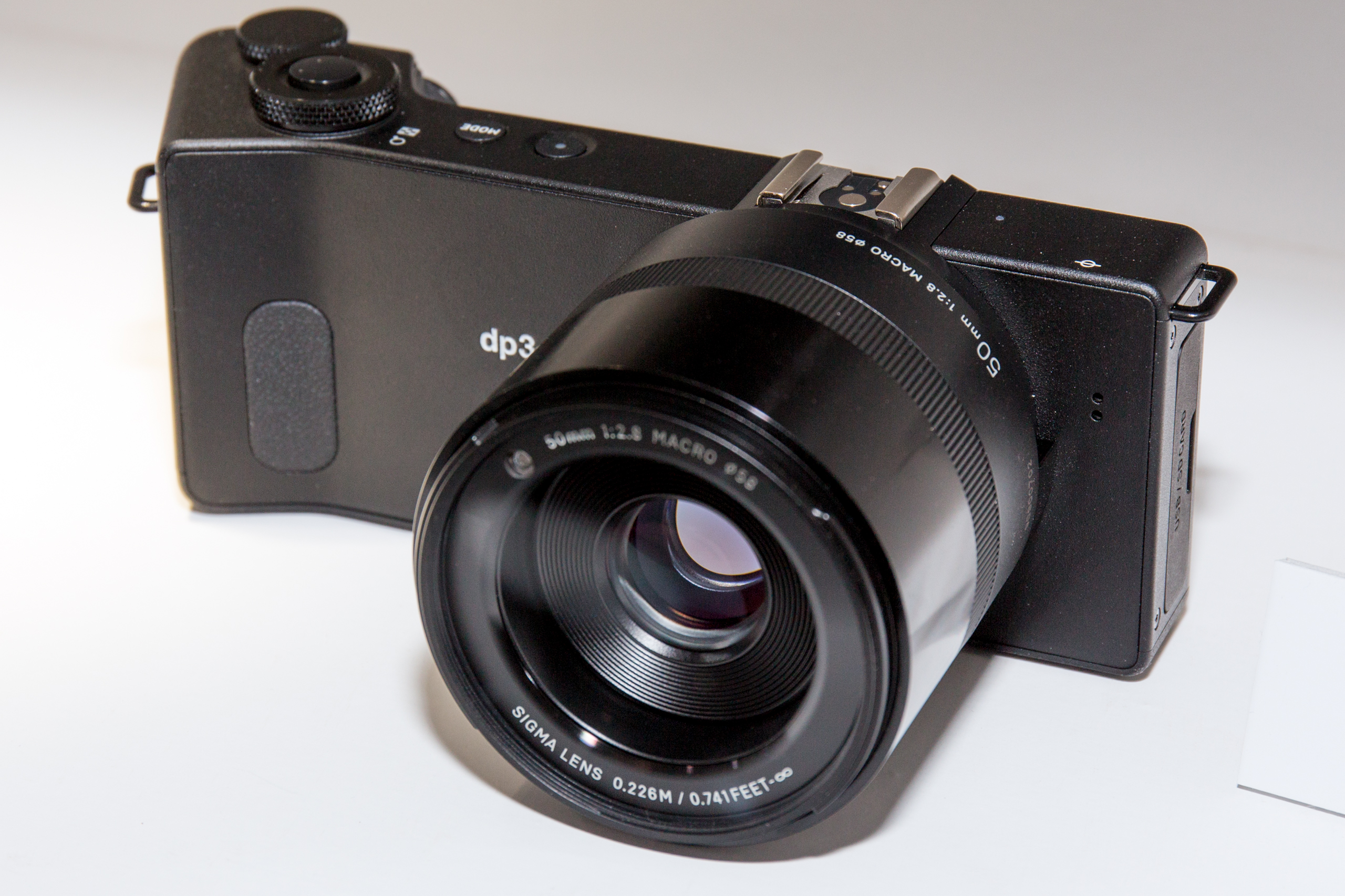
Also Sigma announced the upcoming dp3 Quattro.  This camera includes a 50mm f2.8 lens which is the equivalent of 75mm in 35mm format.

Sigma have stated that it is their intention to have a Quattro model to suit most types of photography.


Thursday, 5 February 2015

New Pentax full frame camera announced

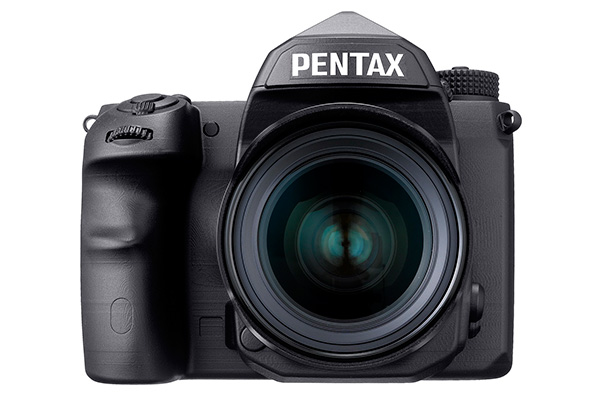
Pentax full frame SLRRicoh Imaging has announced that there will be a new full frame Pentax DSLR.

Very little detail has been announced so far but the camera is due to see it launch at Japan’s CP+ trade show.

Ricoh has said that the camera will be ready for sale by the end of 2015.  It will feature Pentax’s K mount lens system making it compatible with a wide range of lenses both old and new.  The camera will also feature a crop feature allowing the lenses that are designed for the APS-C sensor to work on the camera too.

The design of the exterior is yet to be finalised but Ricoh have issued one image of the camera.
There will also be some new full frame compatable lenses including 70-200mm f2.8 and 150-450mm f4.5-5.6.


The CP+ trade show runs from 12th February until the 15th February 2015.

Wednesday, 4 February 2015

Is it really a stupid question?

Breakwater and Ball - Digital Monochrome, Lee Johnson
On the Amateur Photographer website they have posted a new poll.  This week it is about monochrome photography and asks 'Would you be prepared to convert one of your cameras to black & white?'  Is this a silly question?

After doing my research I still believe that it could well be.  I've read several articles about how much better the monochrome image from a converted digital camera is from a colour image that has been converted.

First, I have to admit that I do love monochrome photography.  There is just something about it and in my head I know it doesn't make sense, after all I do not see objects, people or landscapes in black and white.  I see them in colour.  I am of an age that I remember watching TV in black and white.  Would I go back to those days?  Nope, not really.  I seriously think it's more of a nostalgia thing.

The Leica M Monochrom
Of course there is an exception to this.  That is when I shoot film.  I love processing my own film and although I'm told that C-41 is as easy as black and white, I'm still a bit reluctant to try it and of course I shoot colour film nearly as much as I shoot black and white film.

One of the options in the poll is 'No, I'm saving up for a Leica M Monochrom instead'.  This option does sort of make sense to me.  Why not have a camera that is dedicated to shoot just monochrome images?  Ok, if I were going to spend that much money on a camera and lenses I would probably be looking to invest in a Pentax 645z or a quality large format film camera and not a Leica but at first the sentiment was there.

Heptonstall - Shot on Ilford FP4+ and scanned, Lee Johnson
However, as I began thinking more and more about it I came to the conclusion that it is a bit of a silly question.  My DSLR, compacts and even my mobile phone cameras all have the option to shoot in black and white.  I also have the option to convert an image from colour to monochrome in Lightroom or Photoshop.  Same with film.  I could shoot a colour neg and either process in black and white chemistry or scan it and convert in Photoshop.

Perhaps a converted digital camera may shoot a monochrome image better than some of these options (I still think a negative and a nicely made print is more beautiful than any digital image) but for me, the quality I get using the techniques and equipment I have at my disposal are more than adequate for my needs.

If you are feeling brave you can convert a digital camera to a monochrome digital yourself.  Petapixel have an article here.


Tuesday, 3 February 2015

Same thing but different

Grouse Butt - Bob Singleton
A couple of weeks ago Bob and I went out taking photographs at the same time.  We were not out together but we were in the same geographical area with a similar sort of subject in mind, snow.
Bob chose to go to the summit of Pendle and take some shots there.  I was at Newchurch which is not more than a couple of miles away from Bob.  Bear in mind that we did not know both of us were out an in the same area.

I don’t think we actually class ourselves as any particular type of photographer, we just enjoy photography but that being said we both favour a documentary approach.

It is interesting to look at both our photographs from that session.  They are both documentary photographs.  There has not been any Photoshopping.  Mine had its final levels and sharpening done in Photoshop but that’s it.  I suspect that Bob’s is straight out of Lightroom.

Winter Whites - Lee Johnson
The interesting point is our approaches to a similar subject at the same time.  Bob has exposed his photograph to show the conditions as they were.  It was a bit grey, flat and not particularly nice.

I was looking for something that would make a nice monochrome image.  I wanted some strong blacks, shades of grey and then some almost paper white.  I knew that my cameras meter would underexpose the image so I dialled in about 2 stops of exposure compensation.  The result is what I wanted to achieve.


Both photographs have a lot in common.  They are in the same geographical location; have a similar subject matter (stone, landscapes and weather conditions.  They both look very cold!); and are documentary in nature.  I like Bob’s image as much as I like mine but the interesting thing is that we have the same approach and still come out with something quite different.

Monday, 2 February 2015

Now I get it!


Not so long ago Pentax Ricoh released the Pentax K-S1.  At first I thought the idea of a light up camera was simply folly, a gimmicky selling point.  Last night I changed my mind.

It's fair to say I am a Pentax fan.  I bought my digital KX because I knew there was a lot of excellent quality lens available both new and old available for it.  I knew the imaging was good, I'd searched flickr and done my homework.  Above all the KX felt right in my hand.  It actually felt better in my hand than the equivalent Canon and Nikon did (although I have to admit, it was a toss up between the KX and Nikon).  I love my KX so much that I bought a K1000 film SLR.  I love that so much that I have a Pentax Espio 115G, a 645 (both film and digital) and 110 Auto on my GAS (Gear Acquisition Syndrome) list.

In an earlier post Liam alluded to the both of us taking part in a course on astronomy.  As part of the course we have to take photographs of the star constellation Orion and last night proved to be the first and best opportunity to do that.  So braving the temperature I set off up the nearest hill to bag a shot.

Orion - best seen on Flickr

I've done night photography before but it has always been pretty much in an urban area.  Last night it was dark, in fact it was so dark that my camera's auto-focus was useless and I hit on another problem.  I couldn't see through the viewfinder.  Well, no that's not strictly true.  The light of the rear display was interfering with my eyes own capability to see in the dark.  Of course, I could use live view or turn the display off.  Well, I could have if I could;

  1. remember which button it was in the dark or; 
  2. seen the button in the first place.

As a result I have a new mental note.  That is, 'if shooting in the dark take either a torch or phone with me'.  It helps light the back of the camera up even and I can find the buttons!  Either that or buy a camera that has light up buttons.


The K-S1 isn't such a bad idea anymore!

Thursday, 29 January 2015

Previsualization

The finished shot.
Slightly different from the concept.
Last week a few of us from Blackburn Camera Club had a walk out in to Blackburn Town Centre for a night shoot.  I told the lads that there was a particular alley that I would like to do something with.  So we wandered over and had a look.  It would seem that we were all quite inspired by it and came away with some shots that we were happy with.

In the pub afterwards we were talking about the shoot and one of the lads said something like ‘You knew where you wanted to go and what you wanted to shoot.’  The truth is I did.  In fact I had been thinking about it for a few days.
Previsualization sketch from
my notebook.

Normally, if I had had the time I would have gone out and made a reccy during the day taking some reference shots with either a compact or my phone.  As it turned out I didn’t have time to do this so I had to work from memory.  And it was a long time since I had been from that location.

I’m not sure about how many other photographers do this but I tend to keep a photographers notebook.  In there are the ideas for my projects, shots that have inspired me, recipes for chemistry, developing info for different films and shoot sketches.

I have to admit that it is not often I draw sketches.  I tend to only do this if I’m doing any shots with lighting in them.  It allows me to see where the flash units go.  Of course the practicalities on site often mean that I deviate from the plan but at least I have some idea of what to shot and how to shoot it.

This is called Previsualization and although used more in movie making its origins stem from photography.

So what is previsualization?  The great oracle of information, Wikipedia, sums previsualization as;

Previsualization (also known as pre-rendering, preview or wireframe windows) is a function to visualize complex scenes in a movie before filming. It is also a concept in still photography. Previsualization is applied to techniques such as storyboarding, either in the form of charcoal drawn sketches or in digital technology in the planning and conceptualization of movie scenery make up.’

Ansel Adams (see video below) wrote extensively about visualising photographs before actually going out.  The term Previsualization is attributed to Minor White who divided up visualization up in to sections.  Previsualization was seeing the image before shoot; visualization was studying the subject while shooting; and post-visualization was remembering the subject while printing.  White determined his process of visualization as a ‘psychological concept’.  However, he admitted that he had learned the idea from both Adams and Edward Weston.

Visualization has been used in cinema from the very beginning firstly starting with storyboards.

Walt Disney would photograph the storyboard and edited them together in what was called the Leica Reel and add soundtracks to them as a way of determining the finished animated film.

George Lucas would push the visualization method further with his Star Wars series of films.  The Speeder Bike sequence from Return of the Jedi was planned using models with lip-stick cameras attached.

Later, Lucas’ company Industrial Light and Magic would develop 3D visualization techniques during the filming of Spielberg’s Jurassic Park which won the company an Oscar.  As an interesting side note it was an ILM employee, John Knoll that was behind the creation of Photoshop.

Software for visualization is now readily available should you want to go to that extent. 

However, for me the secret to previsualizing a photograph is to know how light affects a subject, do your research and use your imagination.


Tuesday, 27 January 2015

RPS Starts Analogue Group

Heptonstall Church by Lee Johnson.  Shot on Ilford FP4+ 
with Pentax K1000.
The Royal Photographic Society has set up an analogue photography group in response to what it calls a film photography 'renaissance'.

The group will have its first meeting at College Hall, Lichfield this Saturday (31st January).  Attendance costs £7 to RPS Members and £10 to non-members.

The RPS has stated that they have been overwhelmed with the enthusiasm for film photography after many members responded to an article in their magazine RPS Journal about the importance of film and the creative possibilities of the medium.

The programme for the day will offer opportunities to photograph Lichfield Cathedral and discussions on film photography.


Friday, 23 January 2015

To end the week


To end the week I thought I would post my photograph of the week.  This may just become a regular feature.  So if you would like to see your photograph here then please post images in to the flickr group


Have a good weekend!!!  See you Monday!

Tuesday, 13 January 2015

The River - Lee Johnson

'Oh my God!' A damp feeling ran down the shin and calf of my right leg. The cold shooting through my body was intense like being wrapped in a blanket of ice. It could not have been worse than if I had been slapped in the face with a wet trout.

A welly filling with ice cold river water in the middle of December is probably not anybody's idea of fun. Well, perhaps only fishermen and photographers. It's funny, now that I sit here at my desk I remember just how cold it was. At the time getting home, the comfort of central heating and a few hot chocolates quickly dissipated the memory.

It was on a whim that I visited the waterfalls of Earby. I didn't have any particular shot in mind. The only thing that I had actually thought about was that I wanted to make exposure time quite long. By making long exposures the water becomes blurred and often gives an impression of movement throughout the picture.

When making landscape photographs I tend to start with a very wide view taking in as much of the scene as possible. After a while I begin to settle in to what I am doing and see the micro landscapes and abstracts that I actually find infinitely more interesting than that of the whole. I guess I like details.

A few hours sat at my PC and the cold amnesia had firmly set in. The collection of images I had made were good. In fact it is fair to say that an abstract from the set is one of my favourite photographs I have ever made. I should really find a way of making a nice print of it.

The thing is shooting something like this is a really bad idea for me. I don't really tend to work in single images. I actually prefer to make essays. That is a collection of photographs that tell a story. So when I see something that is beginning to work it tends to start the steam engine to whir the cogs of my brain and the Christmas holidays gave me plenty of time to think.

Taking these shots also coincided with me reading Ted Hughes book of poetry on the River Dart in Devon. Each poem is accompanied by a photograph by Peter Keen. So it was no surprise that my brain went into overdrive. However, there was no chance I was going to attempt to write poems to go with my images. It's one thing writing an article for my blog or a magazine but a completely another world writing poetry and I don't think my command of the English language extends that far.

The festive season came and went and the idea of The River had firmly set in. As with all my ideas for essays the initial idea behind the project had started off too big. Originally the subject of The River was going to be the River Ribble but with a timescale of nine months this was not going to be possible and so I had a re-think. The answer to the brainstorming session was to document a river that was and continues to be much closer to my heart; one that I could visit easily when I had a spare hour or so; the answer was Colne Water.

Colne Water is a river that stretches around five miles from the hamlet of Laneshawbridge, through the town of Colne and ends in the village of Barrowford. Unlike the Ribble it has a very definite start and finish. Very much like the Ribble it has a variety of landscape characteristics from rural through urban fringe, industrial and back to urban fringe.

It turned out to be a good time to document this river. Major changes to it were about to happen. Some of the wiers were removed to allow breeding salmon upstream. No bad thing at least not in my book. Also permission has just been sought to generate electricity from another part of the river. Again, in my opinion no bad thing. And then there was also the demolition of the mill at Waterside.

I tend to take some test shots before I settle in to producing an essay properly. It quickly became apparent that I had found a look to the images that I was happy with. This wasn't going to be about big beautiful landscapes taken during the time of days referred to as the ‘golden hours’ (that is sunrise and sunset). It wasn't going to be about the wildlife of the water course and although there would be some small space for it within the essay the final piece would be more abstract than that.


Beth Derbyshire & The Ark
I began shooting the images that would be included in the final piece without an idea what the final presentation of the piece would be. In general when I start out shooting an essay, I only have a vague idea of what the finished piece will be like. This usually evolves and clears as the process of making photograph continues along. In terms of The River the final piece would become an audiovisual presentation.


Model of The Ark
Some time ago I got involved with Beth Derbyshire’s Ark. This was a converted canal barge that travelled up and down the Leeds Liverpool Canal showing a multi-screen video installation and this proved to be an influence on my final piece. Not having access to multiple screens or projectors I decided that I would create slides with a series of interchanging images from up and down the river. The soundtrack to the imagery would be a soundscape created by recording my walk along the river bank. This hopefully meant that the viewer would be immersed in sights and sounds that I was seeing and hearing.

The River is made up of around 70 images most of which are quite abstract or show some small detail often missed by someone walking along the course of Colne Water. There are some images of the landscape that it sits in; there are some photographs that document some of the wildlife; some are quite pretty; others are quite hard to look at.
The River was never going to be a beautiful celebration of a prized landscape feature. It was always intended to show the viewer how nature and man affect the landscape in a warts and all manner. I think it achieves this.


Tuesday, 6 January 2015

Consumer Electronics Show Show New Toys for Photographers


Pentax 2015CES_Reference_Kmount DSLR with new18-50mm

The annual Consumer Electronics Show held in Las Vegas demonstrates that humble camera is not yeilding to the rise of cameraphone photography with a whole host of new products set to hit the stores.

Amongst the offerings is a mock up of a new DSLR from Pentax that is rumoured to be set for release during this spring as a replacement for the K-50.  Ricoh also showed two mock ups of a new ' high maginifcation super telephoto' and a 'large diameter' telephoto lens.

Nikon unvieled the new D5500.  This 'exceptionally portable' DSLR boasts a 24.2 mega pixel sensor with a vari-angle touchscreen.  Nikon claim that they have improved the contrast detection aouto focus in live view mode so it is 20% faster than the D5300.  The camera also has built in wi-fi and allows smart phone control.  The D5500 will be hitting the shops shortly and is expected to be sold at £639.99 for the body.

Camera makers are also throwing their weight behind the compact market.  Panasonic unvieled the Lumix SZ10 that comes complete with 'slimming mode'.  No longer do you need to use your generic photo-editing package, join a local gym or fat fighters to look slim!  The SZ10 will take pounds off you.  So now you can have your pies and still look good in a selfie!  Despite this little gimmick the SZ10 appears to be quite an impressive little camera with a 24mm wide angle lens, 12x optical zoom flip out monitor and wi-fi again with smartphone control.  All this for £139.99. 

For those looking for something a little more rugged there is also the Lumix FT30 with its 16 megapixel sensor, shock resistance and water resitant to 1.5m.  It also boasts 4x optical zoom and an intelliget underwater photography mode.

The last offering from Panasonic is the very nice looking Lumix TZ70.  Aimed at the high end compact market this camera has a 12 megapixel sensor with 24mm Leica lens and 30x optical zoom.  It has a lens mounted control ring as we have come to expect from high end compacts, geotagging, wi-fi and RAW file recording.  This camera is expected to cost £349.99 and will be available in the UK from March.